
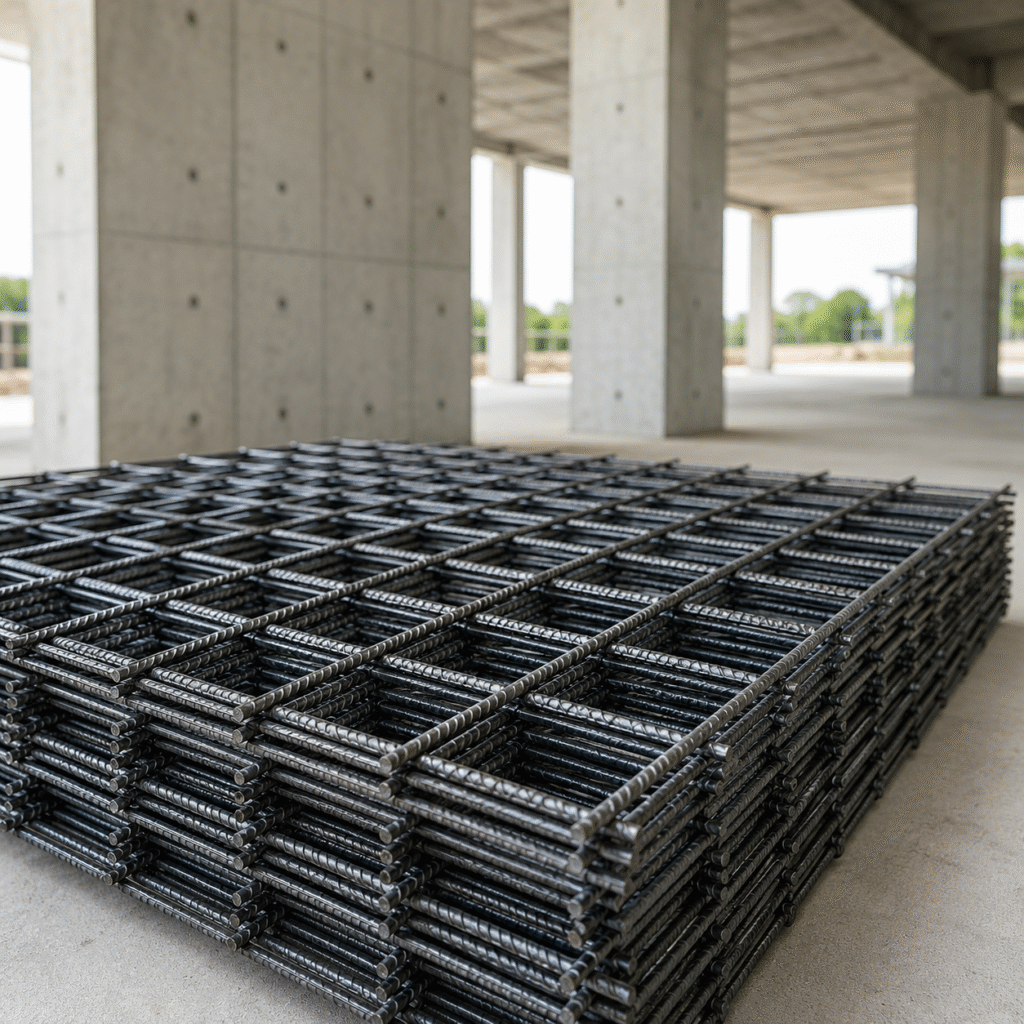
Cold-rolled welded wire mesh is often selected when concrete structures require consistent wire diameter, accurate spacing and higher tensile performance. In modern precast lintels and beams, industrial concrete flooring and structural concrete slab work, the choice between cold-rolled and hot-rolled reinforcement is not only a material decision. It affects crack control, placement speed, concrete bonding and long-term durability.
Table of Contents
- Industry background
- Cold-rolled vs. hot-rolled mesh
- Application comparison
- Technical factors that affect performance
- Common buying mistakes
- Supplier selection and purchasing advice
Industry Background: Why Mesh Selection Matters
Concrete is strong in compression but needs steel reinforcement to control tensile stress, shrinkage cracking and service loads. Welded wire mesh gives contractors and precast plants a prefabricated reinforcement layout, reducing manual tying and improving repeatability.
In many markets, buyers use terms such as high tensile reinforcing fabric, ribbed rebar mesh and cold drawn steel wire mesh. These names are sometimes used loosely, so the important point is to confirm the actual steel grade, wire form, yield strength, weld quality and dimensional tolerance before ordering.
For industrial projects, a small difference in spacing or wire diameter can affect steel area per square meter. That directly influences crack distribution, load transfer and how consistently the reinforcement can be positioned during concrete placement.
Cold-Rolled vs. Hot-Rolled Mesh
Cold-rolled or cold drawn mesh is usually made from wire that has been mechanically worked after hot-rolled rod production. This process improves dimensional accuracy and can increase tensile strength. It is useful where thin sections, accurate reinforcement distribution and efficient prefabrication are important.
Hot-rolled reinforcement, often associated with rebar-based mesh, is commonly used where larger bar diameters, ductility and heavy structural reinforcement are required. It may be preferred for larger slabs, beams or heavily loaded concrete elements.
| Factor | Cold-Rolled Welded Wire Mesh | Hot-Rolled Rebar Mesh |
| Dimensional accuracy | Generally higher | Depends on bar processing accuracy |
| Tensile strength | Often higher due to cold working | Based on rebar grade |
| Surface type | Plain or ribbed wire | Usually deformed bar surface |
| Best use | Thin slabs, precast units, flooring | Heavy slabs, beams, structural cages |
| Processing efficiency | Good for repeated mesh panels | Good for heavier custom reinforcement |
| Handling | Lighter and easier in many panels | Heavier but stronger in large sections |
Application Comparison
Precast Lintels and Beams
Precast lintels and beams require reliable reinforcement positioning because section depth is limited. Cold-rolled welded wire mesh can help maintain accurate spacing and reduce tying labor in repeated production. For narrow precast elements, mesh flatness and wire alignment are especially important because misplaced steel may reduce cover or interfere with concrete flow.
Industrial Concrete Flooring
Industrial floors experience forklift traffic, impact loads, shrinkage and temperature movement. High tensile reinforcing fabric can help control crack width, but only when it is placed at the correct elevation. A strong mesh sitting at the bottom of the slab will not perform as intended. Chairs, spacers and correct overlap details should be included in the construction plan.
Structural Concrete Slabs
In structural concrete slab work, the designer may choose ribbed rebar mesh or welded wire reinforcement depending on load, span, crack control and code requirements. Cold drawn steel wire mesh is useful for uniform distribution, while heavier hot-rolled reinforcement may be required where bending moments and load demands are higher.
Technical Factors That Affect Performance
| Technical Parameter | Practical Meaning | Why It Matters |
| Wire or bar diameter | Steel area in each direction | Affects tensile capacity and crack control |
| Mesh spacing | Distance between wires or bars | Influences crack distribution and concrete flow |
| Ribbed or plain surface | Bond condition with concrete | Affects anchorage and load transfer |
| Yield strength | Stress level before permanent deformation | Must match structural design requirements |
| Weld shear strength | Stability of intersections | Helps keep mesh geometry during handling |
| Sheet flatness | Panel shape before installation | Reduces placement problems and cover errors |
A dense mesh may improve crack distribution, but it can also make concrete consolidation more difficult in thin panels. A larger opening may help concrete flow, but it may not provide the same crack control. Good selection is always a balance between structural performance and buildability.
Common Mistakes in Selection
One common mistake is buying only by weight or sheet price. A cheaper mesh may have wider spacing, lower steel area or less consistent welding. The apparent saving can disappear when installers spend more time correcting shape, cutting panels or fixing cover issues.
Another mistake is requesting custom wire mesh quotes without providing drawings, required grade, sheet size, overlap direction and packaging requirements. For wholesale reinforcing fabric, unclear specifications often lead to mismatched deliveries or unnecessary cutting waste.
A third issue is confusing product names. A cold-rolled steel mesh factory may offer several wire types, including plain, ribbed, galvanized or custom-size panels. Buyers should confirm the actual standard and test certificate instead of relying only on a sales description.
Supplier and Purchasing Considerations
A reliable supplier should understand both steel processing and concrete application. Important checks include wire source control, drawing accuracy, welding consistency, sheet tolerance, bundle labeling and repeat-batch stability.
Before purchasing, confirm:
- Steel grade and applicable standard
- Wire diameter and mesh spacing
- Plain or ribbed wire requirement
- Sheet size, flatness and tolerance
- Surface finish or corrosion protection need
- Bundle weight, loading method and delivery sequence
- Mill certificate and inspection records
For bulk orders, packaging is not a minor detail. Well-stacked and clearly labeled mesh reduces unloading time, prevents deformation and helps contractors place the right panel in the right location.
Practical Final View
Cold-rolled welded wire mesh is well suited to projects that need accurate spacing, efficient placement and controlled crack distribution. Hot-rolled rebar mesh remains important for heavier structural sections and larger load demands.
The best choice is not decided by one word such as “cold-rolled” or “hot-rolled.” It is decided by steel area, bond condition, weld quality, placement accuracy and how the mesh fits the real construction process. For modern concrete structures, the right reinforcing fabric should make the work easier to inspect, easier to install and more reliable after the concrete hardens.