
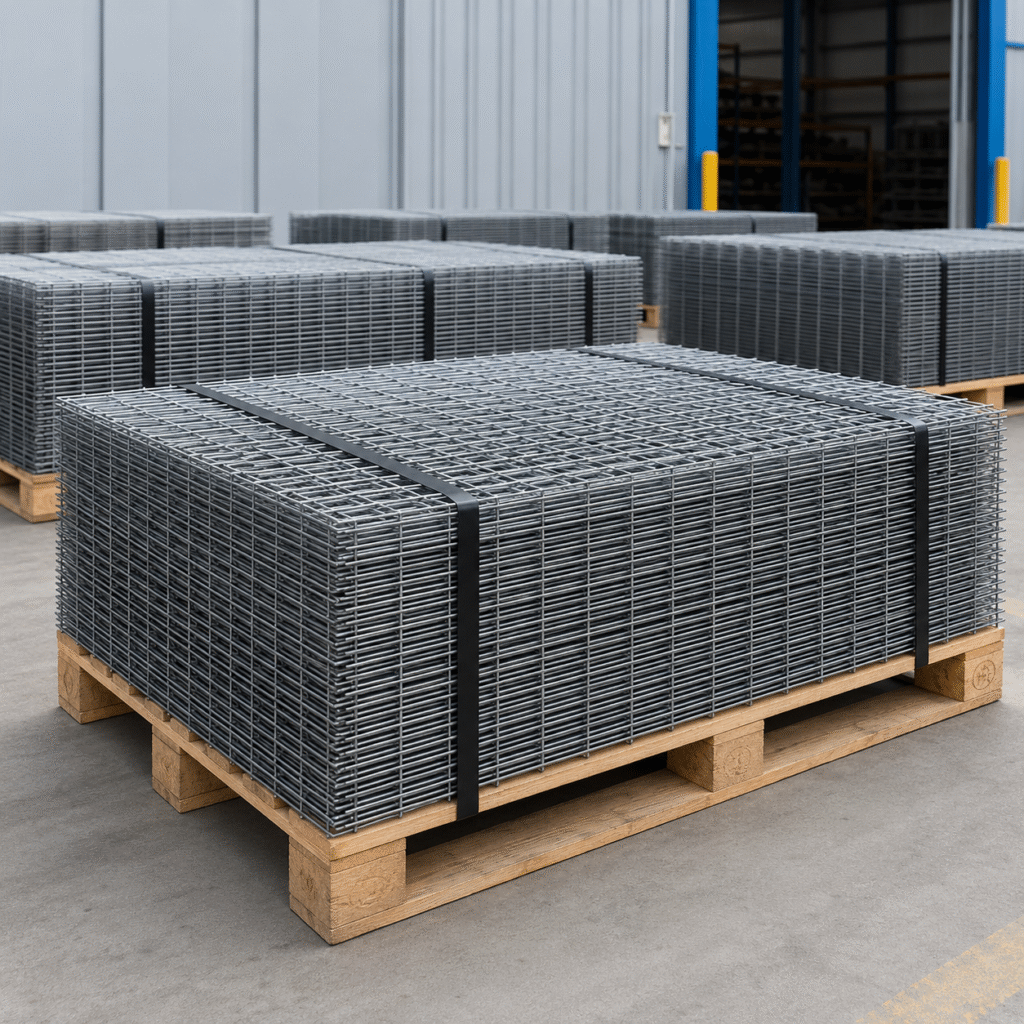
Steel mesh procurement is no longer just a matter of comparing price per sheet or price per ton. For contractors, distributors and project buyers, the real cost depends on whether the mesh matches the drawing, arrives in the right sequence, fits the container plan and can be installed without unnecessary cutting or rework.
Table of Contents
- Why procurement planning matters
- From blueprint to customized production
- Key technical factors in bulk ordering
- Logistics and international shipping coordination
- Common purchasing mistakes
- Supplier selection considerations
Industry Background: Procurement Is Part of Project Control
Steel wire mesh is widely used in concrete reinforcement, fencing, retaining systems, industrial flooring, precast elements and temporary site protection. In global construction sourcing, the buying process often involves engineering drawings, factory fabrication, inspection, packing, export documents and international steel mesh shipping.
When these steps are handled separately, delays are common. A buyer may receive an attractive wholesale steel mesh price, but later find that the panel size does not match the jobsite handling method, the bundles are too heavy for unloading equipment, or the customs description is too vague for smooth clearance.
Good procurement connects engineering, production and logistics from the beginning.
Blueprint Customized Production
Blueprint customized production starts with one question: what does the mesh need to do in the final structure or worksite?
For reinforcement mesh, wire diameter, opening size and steel grade influence load distribution and crack control. For protective mesh, edge strength, surface finish and panel stiffness may be more important. For industrial screening or enclosure use, flatness, aperture tolerance and corrosion resistance may decide service life.
A capable steel wire mesh manufacturer should convert drawings into a practical fabrication plan. This includes cutting allowance, bending direction, overlap areas, edge finishing, bundle sequence and labeling. The goal is not only to produce the mesh correctly, but to make the installation team’s work easier.
Technical Factors That Affect Procurement Efficiency
| Specification Factor | Practical Meaning | Procurement Impact |
| Wire diameter | Steel section and strength level | Affects weight, cost and performance |
| Mesh opening | Distance between wires | Influences function, cutting waste and packing density |
| Panel size | Delivered sheet dimension | Determines container loading and site handling |
| Surface treatment | Black, galvanized, coated or painted | Affects corrosion resistance and lead time |
| Tolerance | Allowable variation in size and spacing | Reduces installation adjustment and rejection risk |
| Packaging method | Bundle weight and protection | Affects unloading speed and deformation risk |
A small specification change can affect the entire supply chain. For example, increasing panel length may reduce overlaps on site, but it may also reduce container loading efficiency or make manual handling difficult. Choosing a galvanized surface may improve outdoor durability, but it can increase production time and require better packing protection.
Bulk Steel Fabric Ordering
Bulk steel fabric ordering works best when the buyer provides complete information before quotation. A useful request should include drawings, steel grade, wire diameter, mesh opening, panel size, surface finish, quantity, packing requirements and destination port or delivery address.
For contract metal manufacturing, unclear specifications usually create hidden costs. Factories may quote based on assumptions, and those assumptions may not match the project requirement. The result can be delays, extra cutting, disputes over tolerance or additional freight charges.
A better approach is to request a manufacturing review before mass production. This review should check whether the mesh can be produced consistently, whether the sheet size is practical for packing, and whether the loading plan matches the buyer’s receiving conditions.
Logistics and International Shipping Coordination
International steel mesh shipping requires more than booking a container. Mesh is heavy, bulky and easily deformed if bundled poorly. Long panels may need special stacking methods. Galvanized or coated mesh may need moisture protection to reduce surface staining during transit.
Shipping terms should be clarified early. Buyers should understand whether the supplier is quoting EXW, FOB, CIF or another trade term. This affects who is responsible for inland transport, export handling, ocean freight, insurance and destination charges.
For global construction sourcing, delivery sequence can be as important as delivery date. If mesh for later project stages arrives before the first-stage material, storage pressure increases. Clear bundle labels by project zone, drawing number or installation phase can save significant time at the jobsite.
Common Purchasing Mistakes
One common mistake is comparing only the wholesale steel mesh price. A lower price may hide wider tolerances, weaker packing, poor documentation or unstable repeat production.
Another mistake is ignoring container utilization. A mesh size that looks efficient on the drawing may not load efficiently into standard containers. This increases freight cost per square meter.
A third mistake is treating packaging as a minor issue. Bent corners, loose bundles and unclear labels can slow unloading, increase damage and create confusion during installation.
Choosing the Right Supplier
A reliable supplier should understand both fabrication and project use. Important checks include material traceability, welding quality, cutting accuracy, surface treatment control, drawing interpretation and export documentation experience.
Before placing an order, confirm:
- Drawing version and technical standard
- Wire diameter, mesh opening and panel size
- Surface finish and corrosion protection needs
- Quantity by size and project phase
- Bundle weight, packing method and loading plan
- Shipping term and destination responsibility
- Inspection documents and material certificates
Practical Final View
Steel mesh procurement becomes efficient when the buyer treats fabrication and logistics as one connected process. The best supplier is not always the lowest-price factory, but the one that can turn drawings into stable production, pack the material correctly and coordinate delivery with the project schedule.
For industrial supply chain management, that reliability is often where the real saving happens.