
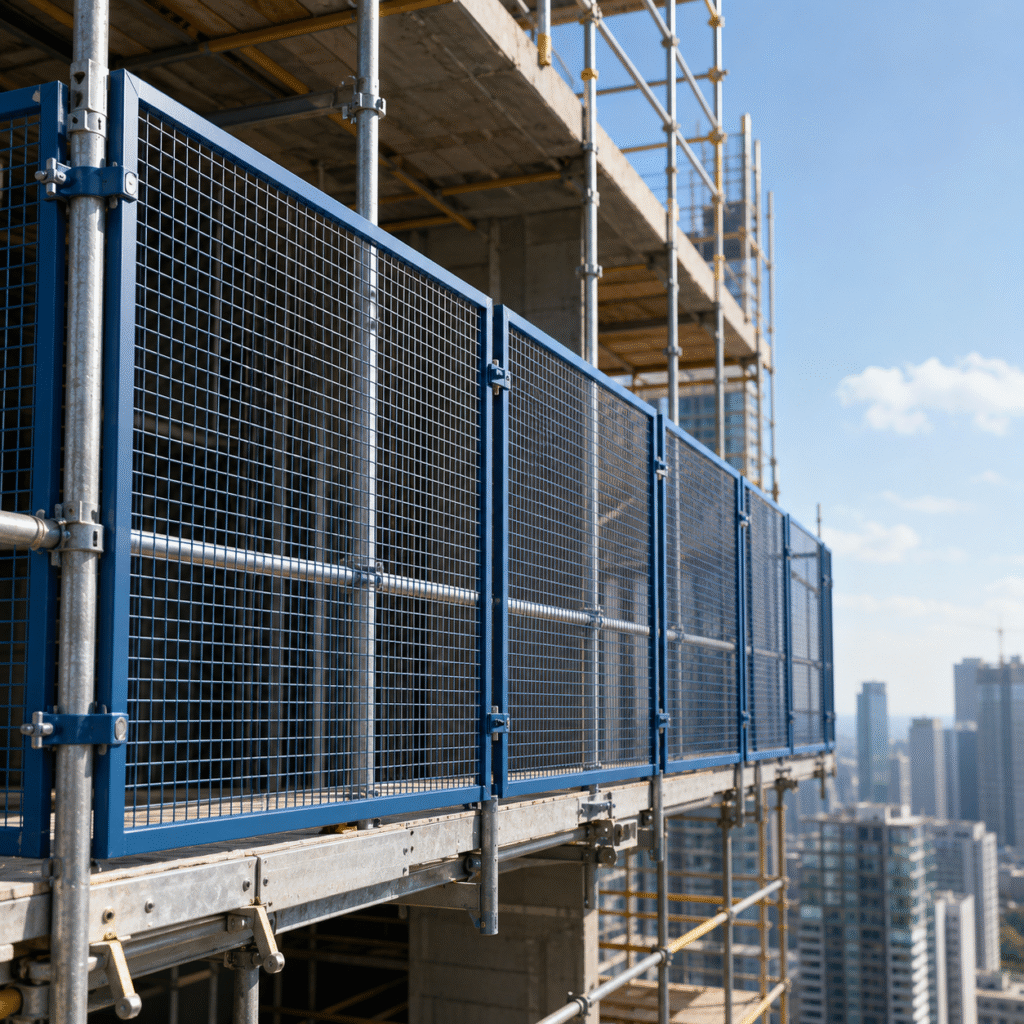
Scaffolding protective steel mesh is used on modern construction sites to reduce falling-object risk, improve edge-area control and support safer high-rise building construction. For contractors, builders and building material procurement teams, the right mesh is not just a safety accessory. It is part of the temporary works system that protects workers, pedestrians and materials during active construction.
Table of Contents
- Why protective mesh matters in high-rise work
- How material and mesh design affect performance
- Application comparison
- Common selection mistakes
- Buying and supplier considerations
Industry Background: Why Site Protection Needs Better Materials
High-rise projects create a different safety environment from low-rise construction. Tools, concrete fragments, fasteners and small materials may fall from elevated platforms. Wind exposure is higher. Scaffolding is often used for long periods while façade, concrete repair, painting or installation work continues floor by floor.
Traditional plastic safety netting is lightweight and economical, but it may not offer the same durability where impact, abrasion or repeated handling are expected. Scaffolding protective steel mesh provides a stronger barrier, especially when the project requires long service life, better shape retention and more stable attachment to scaffold frames.
In practice, the mesh should work together with guardrails, toe boards, platforms and anchoring systems. It should never be treated as a substitute for a properly designed scaffold.
How Technical Parameters Affect Safety Performance
A useful specification should connect material data with real site behavior.
| Technical Factor | Practical Meaning | Site Impact |
| Wire diameter | Thickness of each steel wire | Affects impact resistance and service life |
| Mesh opening | Clear space between wires | Controls debris containment and wind passage |
| Tensile strength | Resistance to stretching or breaking | Important under impact and installation tension |
| Surface treatment | Galvanized, coated or painted finish | Improves corrosion resistance outdoors |
| Panel flatness | Shape stability before installation | Makes fixing faster and reduces gaps |
| Edge design | Reinforced or framed edges | Helps prevent tearing, bending and loose corners |
A smaller mesh opening can catch smaller debris, but it also increases wind resistance. On tall façades, wind load should be considered carefully because a tightly covered scaffold can transfer additional force to the scaffold structure. Larger openings reduce wind pressure but may not stop small tools, concrete chips or packaging materials.
Material Choices and Steel Behavior
Some buyers compare scaffolding mesh with terms used in reinforcement products, such as high tensile reinforcing fabric, ribbed rebar mesh or cold drawn steel wire mesh. These products are not always used for the same purpose, but the comparison is useful. High tensile wire improves resistance to deformation. Ribbed surfaces improve bonding in concrete, but they are usually unnecessary for external scaffold protection. Cold drawn steel wire mesh can offer consistent wire diameter and good dimensional control, which is helpful when panels need to fit repeated scaffold bays.
For protective use, the most important factors are impact resistance, corrosion protection, attachment stability and safe handling weight. A mesh that is too light may deform quickly. A mesh that is too heavy may slow installation and create unnecessary handling risks.
Application Comparison
Site Safety Protection
For general site safety protection, steel mesh is used to form a physical barrier along scaffold elevations, walkways or material handling zones. It helps keep loose materials inside the work area and reduces exposure to nearby workers or pedestrians.
Scaffolding Fall Protection Support
Scaffolding fall protection should rely on approved guardrails, platforms and fall-arrest systems. Steel mesh can support the overall protection strategy by closing side gaps and improving visual separation, but it should not be described as the only fall protection measure.
High-Rise Building Construction
In high-rise building construction, repeated installation and removal can damage weak mesh materials. Steel mesh panels are more suitable where the scaffold remains in service for months, where strong wind is common, or where façade work produces sharp debris.
Common Selection Mistakes
One common mistake is choosing mesh only by price per square meter. A cheaper product may have thinner wire, wider tolerance or weak edge treatment, leading to more replacement during the project.
Another mistake is ignoring wind. A dense mesh may appear safer, but if the scaffold design does not account for wind load, the protection system can create new structural concerns.
A third mistake is unclear procurement language. Safety wire netting wholesale orders should confirm wire diameter, mesh opening, panel size, finish, edge reinforcement, packing method and fixing accessories. Without these details, two suppliers may quote products that look similar but perform differently on site.
Choosing a Scaffolding Mesh Supplier
A reliable scaffolding mesh supplier should understand both steel fabrication and construction site use. Important checks include welding consistency, edge finishing, coating quality, bundle protection and repeat-order stability.
For large projects, ask whether the supplier can support custom panel sizes for standard scaffold bay dimensions. Custom sizing can reduce cutting work, shorten installation time and keep site appearance more consistent.
Before purchase, confirm:
- Project safety requirements and local scaffold regulations
- Mesh opening and wire diameter
- Galvanized or coated surface requirement
- Panel size and edge reinforcement
- Fixing method and accessory compatibility
- Bundle weight and unloading method
- Inspection, packing and delivery schedule
Practical Final View
Good scaffolding protective steel mesh improves safety by making the temporary work area more controlled. It contains debris, resists deformation and helps workers maintain a cleaner boundary around elevated operations.
For high-rise projects, the right choice is not simply the strongest or cheapest mesh. It is the mesh that matches scaffold design, wind exposure, installation method, handling capacity and the project’s safety management plan. When selected correctly, protective steel mesh becomes a practical part of safer, cleaner and more efficient construction.