
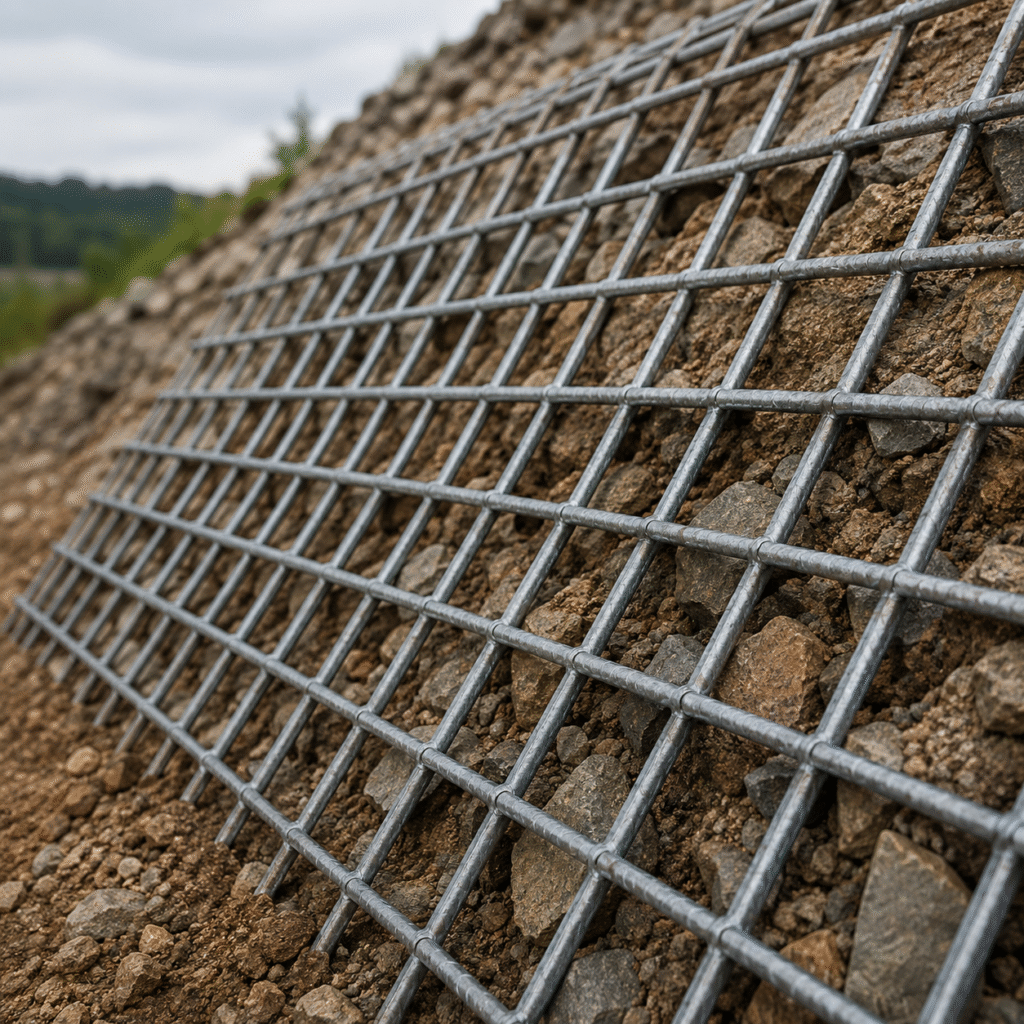
Heavy duty welded wire mesh is widely used where soil, rock and concrete must work together under difficult site conditions. In deep foundation excavation, mine tunnel timbering, retaining wall reinforcement and shotcrete support, mesh is not only a steel product. It is part of the ground control system that helps stabilize loose material, distribute stress and keep construction progress predictable.
Table of Contents
- Why welded mesh matters in geotechnical work
- Key technical parameters
- Application comparison
- Common selection mistakes
- Supplier and purchasing considerations
Industry Background: Ground Support Is a System
Foundation pits and underground openings are rarely stable by accident. Soil pressure, groundwater, vibration, blasting, excavation sequence and weather can all change site behavior. Engineers therefore combine anchors, soil nails, shotcrete, steel sets, timbering, drainage and reinforcement mesh to create a controlled support system.
Heavy mesh is often selected because it bridges loose ground between anchors or bolts. In shotcrete work, shotcrete steel reinforcement mesh helps hold the sprayed concrete together and reduces local cracking. In mining, mining wire mesh panels are commonly installed with rock bolts to retain small rock fragments between major support points.
For contractors, the value is practical. A mesh panel that keeps its shape, fits the bolt pattern and can be installed quickly helps reduce underground exposure time and shortens reinforcement preparation around excavation faces.
Key Technical Parameters and Their Meaning
A useful mesh specification should explain how the steel behaves in the field, not only list wire diameter and opening size.
| Technical Factor | Practical Meaning | Site Impact |
| Wire diameter | Steel section of each wire | Affects impact resistance and load distribution |
| Mesh opening | Distance between crossing wires | Controls rock fragment retention and concrete penetration |
| Weld strength | Stability of wire intersections | Keeps panels intact during handling and shotcrete application |
| Panel size | Delivered working dimension | Affects installation speed and worker handling |
| Surface treatment | Black, galvanized or coated finish | Improves corrosion resistance in wet or aggressive sites |
| Flexibility | Ability to follow uneven ground | Important for tunnels, slopes and irregular excavation faces |
A smaller opening can retain smaller fragments, but it may also make shotcrete penetration more difficult if the concrete mix is not properly adjusted. A larger opening is easier to spray through, but it may not provide enough surface control in fractured ground. Good selection normally balances retention, concrete flow and installation speed.
Application Comparison
Foundation Pit Support Mesh
In deep foundation excavation, foundation pit support mesh is often used with soil nails, shotcrete or retaining wall systems. The mesh helps distribute local stress and supports the sprayed concrete layer across the exposed soil face.
For urban basements, subway stations or underground parking projects, installation speed matters. Excavation often proceeds in stages, and each exposed layer must be stabilized before the next cut. A panel size that matches the excavation rhythm can reduce cutting waste and make inspection easier.
Shotcrete Steel Reinforcement Mesh
In shotcrete applications, mesh improves toughness and crack control. It gives the shotcrete layer a reinforcement skeleton, especially around corners, transitions, tunnel crowns and areas where rebound or poor compaction may occur.
However, mesh must be positioned correctly. If it sits too far from the substrate or is poorly fixed, shotcrete may not fully encapsulate the wires. This can create voids, corrosion paths or weak zones.
Mining Wire Mesh Panels
Mining wire mesh panels are used for roof and rib support, usually together with bolts, plates and sometimes shotcrete. In mine tunnel timbering or steel-set support areas, mesh helps contain small rock pieces that may detach between primary supports.
Handling weight is important underground. A panel that is too heavy slows work and increases fatigue. A panel that is too weak may deform during installation or fail to retain loose rock. Practical mining mesh design should consider both strength and crew handling conditions.
Common Selection Mistakes
One common mistake is choosing mesh only by weight. More steel does not always mean better performance. If the mesh opening, weld quality or panel shape does not fit the ground support design, a heavier product can still create problems.
Another mistake is ignoring corrosion exposure. In wet pits, drainage areas or mines with aggressive water chemistry, galvanized or coated mesh may be more suitable than plain black steel. The surface requirement should be decided before price comparison.
A third mistake is ordering bulk geotechnical materials without confirming installation sequence. Mesh for foundation pits, tunnels and mines should arrive in bundles that match the work zones. Poor labeling can waste time at the site and increase material handling.
Supplier and Bulk Purchasing Considerations
When buyers need to buy mining wire mesh or source mesh for excavation support, an industrial steel mesh supplier should be evaluated by manufacturing control as well as price. Important checks include wire source, welding consistency, panel tolerance, flatness, coating quality and repeat-batch stability.
Before ordering, confirm:
- Project drawing and support design requirements
- Wire diameter and mesh opening
- Panel size and allowable tolerance
- Weld strength and intersection stability
- Surface finish for corrosion exposure
- Bundle weight and underground handling method
- Packaging, labeling and delivery sequence
- Material certificate and inspection records
For large projects, custom sizing can be more economical than buying standard panels and cutting them on site. Less trimming means less waste, faster installation and a cleaner working face.
Practical Final View
Heavy duty welded wire mesh performs best when it is selected as part of the support system, not as a loose commodity. The right mesh should match the ground condition, shotcrete method, anchor spacing, handling limits and construction sequence.
For foundation pit support, mining and retaining wall reinforcement, the most reliable choice is not simply the thickest or cheapest panel. It is the mesh that can be installed safely, stay stable under site loads and help the support structure perform as the engineer intended.